




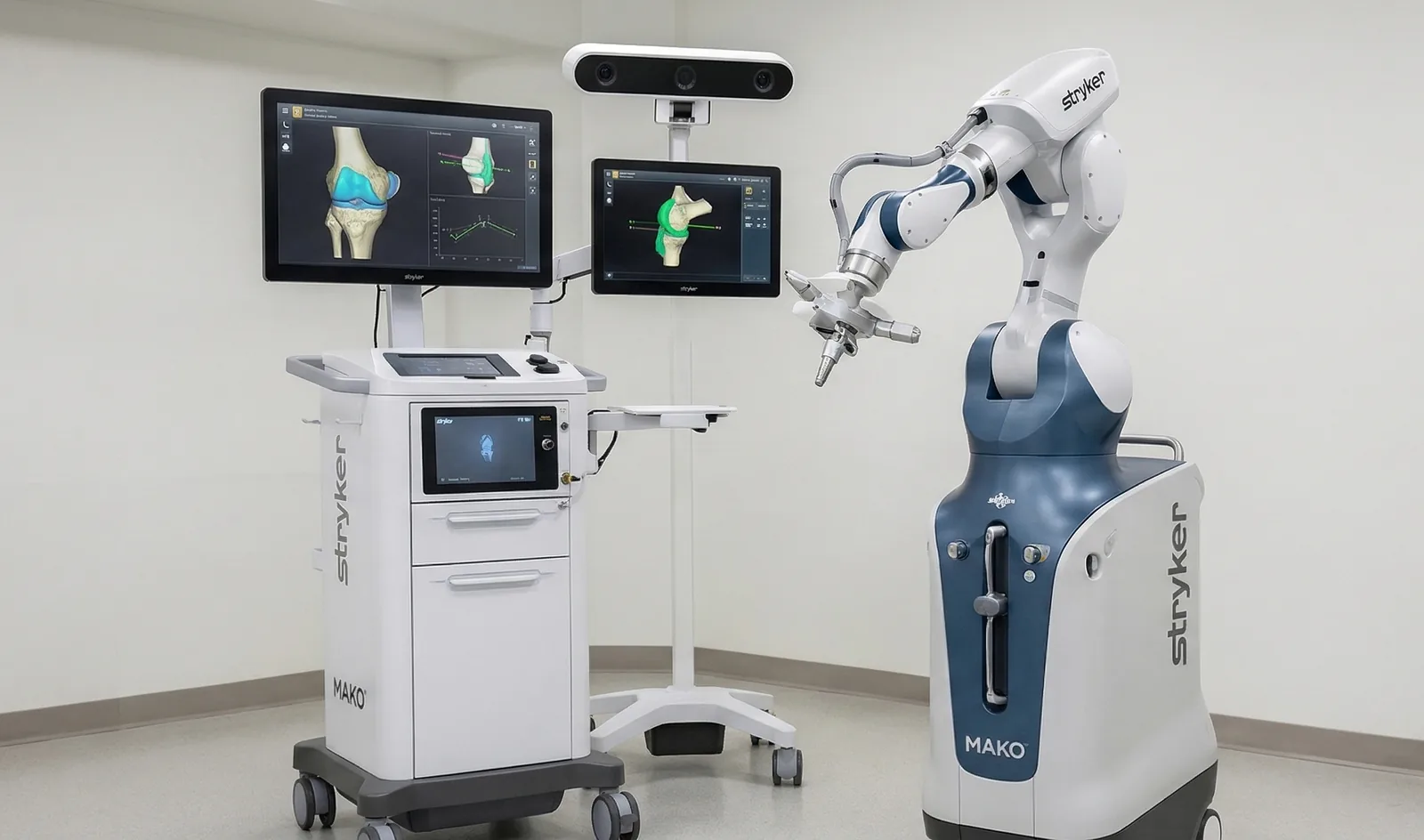
Mako Robotic Knee Replacement in Richmond, VA
How the Mako robotic-arm system personalizes knee replacement surgery, and what patients can expect from consultation through recovery.
Introduction
Mako robotic knee replacement is a surgical procedure that uses advanced robotic technology to enhance the precision and effectiveness of knee surgeries. This approach allows for minimally invasive techniques, which can support quicker recovery times and improved patient outcomes. In Richmond, VA, Dr. Barton Harris specializes in this advanced orthopedic care. This guide explores Dr. Harris's qualifications, the Mako procedure, patient candidacy, and what to expect during recovery.
Research on Robotic vs. Conventional Knee Replacement
Robotic total knee arthroplasty has been shown to lead to more precise prosthesis implantation, with significantly fewer outliers in mechanical axis, femoral coronal, and tibial sagittal alignment compared with conventional techniques. In one comparative analysis, only the Hospital for Special Surgery score at final follow-up was significantly better with robotic surgery, which also showed lower mean blood loss despite a longer mean operation time.
Robotic-assisted total knee arthroplasty is comparable to conventional total knee arthroplasty: a meta-analysis and systematic review, JR Onggo, 2020
About Dr. Barton Harris
Dr. Barton Harris is an orthopedic surgeon specializing in advanced orthopedic care, particularly Mako robotic knee replacement. With extensive experience in robotic-assisted procedures, Dr. Harris is dedicated to providing patient-centered care that prioritizes individual needs and outcomes, with a focus on minimally invasive techniques that promote faster recovery.
Mako Robotic Knee Replacement Overview
Mako robotic knee replacement uses robotic-arm technology to assist surgeons in performing knee replacements with a high degree of precision. The Mako system allows for a personalized surgical plan based on a patient's unique anatomy, created using advanced imaging techniques. This tailored approach enhances the accuracy of the surgery while minimizing damage to surrounding tissue, supporting a quicker recovery and a faster return to daily activities.
Enhanced Accuracy and Patient Outcomes
Robotic-assisted total knee arthroplasty is intended to improve the accuracy of component positioning and more precisely match a patient's anatomy and biomechanics. This can favorably affect postoperative pain, hospitalization, long-term implant survival, and patient satisfaction.
Robotic-assisted total knee arthroplasty in clinical practice: protocol for a randomised controlled trial, F Migliorini, 2023
Benefits of Mako Robotic Knee Replacement
Benefits of the Mako system include precision, since robotic assistance allows for highly accurate bone removal and implant placement; a minimally invasive approach, with smaller incisions that lead to less tissue damage and quicker recovery; and personalized care, since each procedure is tailored to the patient's unique anatomy to help improve outcomes.
The Mako system allows for improved implant placement using CT guidance, bone resection accuracy, and flexibility for functional implant placement with gap balancing. When combined with kinetic sensors, it also supports improved rotation and soft tissue balance.
The MAKO robotic-arm knee arthroplasty system, M Roche, 2021
Patient Candidacy and the Consultation Process
Determining candidacy for Mako robotic knee replacement involves a thorough evaluation of the patient's medical history, current health status, and specific knee condition. Ideal candidates typically include individuals with severe osteoarthritis, knee deformities, or those who have not found relief through conservative treatment. During consultation, Dr. Harris reviews the patient's medical history, performs a physical examination to assess range of motion and function, and uses imaging studies such as X-rays or MRIs to evaluate the extent of joint damage, helping develop a tailored treatment plan.
Recovery and Rehabilitation Guidance
Recovery from Mako robotic knee replacement typically involves a structured rehabilitation program to restore mobility and strength. Patients usually begin physical therapy shortly after surgery, focusing on gentle exercises to improve range of motion and gradually increase activity. The typical recovery timeline ranges from six to twelve weeks: the first week focuses on pain management and initial mobility exercises, weeks two through four bring a gradual increase in physical activity, and weeks five through twelve continue rehabilitation with an emphasis on strengthening and functional activities.
Frequently Asked Questions
What is Mako robotic knee replacement? Mako robotic knee replacement is a minimally invasive surgical procedure that uses robotic technology to assist surgeons in performing knee replacements with enhanced precision, allowing for a personalized surgical plan based on each patient's unique anatomy.
How long is recovery after robotic knee surgery? Recovery typically takes six to twelve weeks, during which patients engage in a structured rehabilitation program to restore mobility and strength, with many experiencing meaningful pain relief and improved function during this time.
Keep reading
Ready to Take the Next Step?
If you're considering joint replacement surgery, schedule a consultation to discuss your options and learn how outpatient surgery can get you back to your active lifestyle faster.