
MAKO Robot-Assisted Knee Replacement
Combining expert surgeon skill with the MAKO robotic surgical system by Stryker for a personalized, well-balanced knee replacement, usually done as same-day outpatient surgery.
Quick answer
Dr. Barton Harris, a fellowship-trained hip and knee replacement surgeon with OrthoVirginia, performs Mako robotic-assisted total knee replacement for patients in the Richmond metro and surrounding areas. Most of his Mako knee replacements are done as same-day outpatient surgery at Boulders ASC or the OrthoVirginia ASC, so patients recover at home. Mako is covered by most major insurance plans. To schedule a consultation, call (804) 939-6648.
 Written by Barton Harris, MD
What is MAKO Robot-Assisted Knee Replacement?
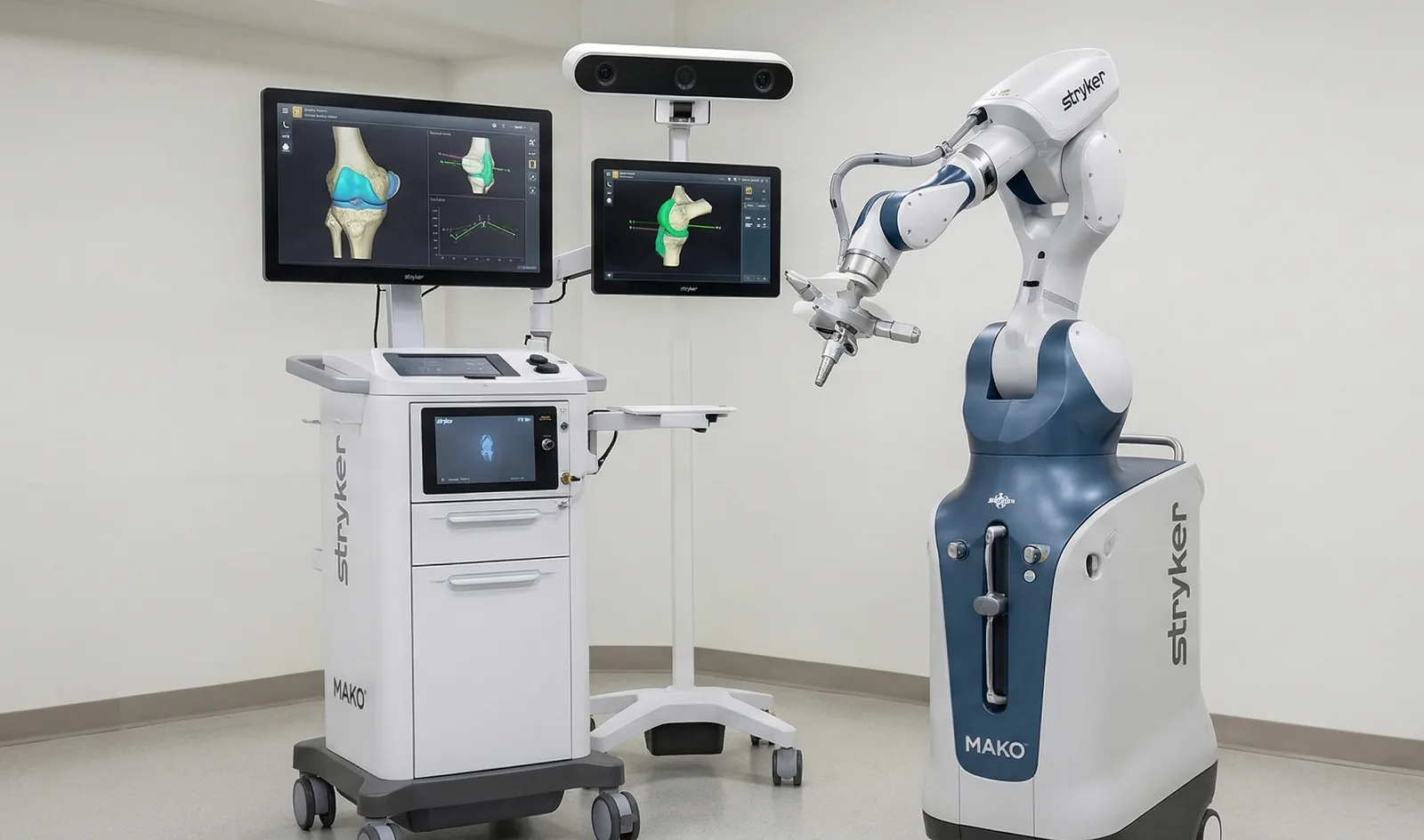
MAKO robot-assisted knee replacement is a knee replacement performed with the MAKO robotic surgical system by Stryker. A CT scan creates a 3D model of the knee and a personalized surgical plan before surgery. During the procedure, Dr. Harris guides the robotic arm, which sets haptic boundaries so only the planned bone is removed. The surgery is entirely surgeon-led and robot-assisted; the robot does not move on its own.
Dr. Harris uses Mako to plan each knee replacement around the patient's own anatomy. The 3D plan and the robotic guidance help him place the implant accurately and remove only the bone that needs to come out.
The MAKO robotic surgical system by Stryker is an advanced tool that functions like a "GPS" for your knee. It combines pre-operative 3D imaging and mapping capabilities with intra-operative, real-time robotic guidance. This provides live data and creates a "virtual boundary" that prevents the surgeon from moving outside the planned area. This helps keep bone cuts where they were planned and protects the soft tissues around the knee.
Dr. Harris is in control of the MAKO system 100% of the time. The procedure is entirely surgeon-led and robot-assisted.
Why MAKO Precision Matters
A knee replacement is a mechanical device. Like the tires on a car, good alignment matters for how it wears and how it feels.
- Improper alignment can lead to premature wear.
- Studies show robotic assistance reduces alignment outliers compared with manual instruments.
- Good balance helps the knee feel stable and natural.
MAKO Technology Benefits
Advanced planning and precise execution translate to real benefits for patients.
Greater Precision in Implant Placement
MAKO robotic arms assist the surgeon in making bone cuts with sub-millimeter accuracy, which improves implant positioning and alignment.
Personalized Surgical Approach
Utilizing MAKO's 3D imaging and mapping capabilities, a customized surgical plan is created based on each patient's unique anatomy before surgery even begins.
Reduced Soft Tissue Trauma
MAKO's real-time robotic guidance allows us to remove only the diseased bone, preserving healthy bone stock and minimizing surrounding tissue damage.
An Easier Early Recovery
Accurate alignment and less soft tissue trauma can mean less pain early on and an easier recovery.
The MAKO Robotic Process
3D Imaging & Personalized Mapping
Before surgery, a CT scan creates a highly detailed 3D model of your knee. Dr. Harris uses the MAKO software to virtually size, position, and map your implant based on your exact anatomy.
Intra-operative Guidance
During surgery, the MAKO system provides real-time data on your ligament tension, allowing Dr. Harris to fine-tune the personalized surgical plan for good balance and alignment.
Robotic-Assisted Execution
The surgeon guides the MAKO robotic arm to remove bone. The system sets haptic boundaries to ensure only the planned bone is removed, protecting the surrounding tissues.
Precision Implant Placement
With the bone prepared to plan, the implant is placed and its fit and balance are checked before the incision is closed.
MAKO Recovery Expectations
Surgery
MAKO Robotic-assisted procedure performed. Patients typically walk with assistance and go home the same day.
Cane & Driving
Most patients move from a walker to a cane and are driving again once they are down to a cane or nothing.
Normal Walking
Most patients are walking without a limp.
Long Term
Strength and comfort keep improving for several months, often up to a year.
Frequently Asked Questions
Does Dr. Harris use Mako for knee replacement?
Yes. Dr. Harris uses the Mako robotic system by Stryker for total knee replacement, and most of his Mako knees are done as same-day outpatient surgery.
Can a Mako knee replacement be done as outpatient surgery?
Yes. Most of Dr. Harris's Mako knee replacements are same-day outpatient surgery at Boulders ASC or the OrthoVirginia ASC, and patients recover at home. He will tell you at your consultation whether outpatient surgery is right for you.
Does Mako robotic surgery cost more?
Typically, no. Mako knee replacement is covered by most major insurance plans just like a traditional knee replacement. Your out-of-pocket cost depends on your plan's deductible and coinsurance.
Does the Mako robot do the surgery?
No. Dr. Harris performs the surgery. The robotic arm only moves when he guides it, and it resists moving outside the planned boundary so bone cuts stay where they were planned.
Is there more radiation involved with Mako?
A CT scan of the knee is done before surgery to build the 3D plan. The radiation dose is low, and the benefit of a personalized plan generally outweighs this small exposure.
Is recovery faster with Mako?
Studies suggest robotic assistance can mean less soft tissue damage and less pain early in recovery. Most patients walk the day of surgery, and most are driving again in 2 to 4 weeks, once they are down to a cane or nothing.
Does a Mako knee last longer?
Mako improves how accurately the implant is placed, and good alignment matters for wear. Long-term studies comparing robotic and manual knees are still ongoing, so it is too early to say robotic knees last longer.
Who is a good candidate for Mako knee replacement?
Most people who need a total knee replacement for arthritis can have it done with Mako. The best way to find out is a consultation and X-rays with Dr. Harris.
Who does outpatient robotic knee replacement near Mechanicsville, VA?
Dr. Barton Harris, a fellowship-trained hip and knee replacement surgeon with OrthoVirginia, does Mako robotic-assisted knee replacement as same-day outpatient surgery. His office is at 8200 Meadowbridge Rd, Suite 200, in Mechanicsville, and he sees patients from across the Richmond metro and surrounding areas. Call (804) 939-6648 to schedule.
Where is a Mako knee replacement done?
Most of Dr. Harris's Mako knee replacements are done at Boulders ASC or the OrthoVirginia ASC, and patients go home the same day. If an overnight stay is the safer choice for you, he operates at Bon Secours Memorial Regional Medical Center.
Does insurance cover Mako robotic knee replacement?
Yes, most major plans cover it, including Anthem Blue Cross Blue Shield, Aetna, Cigna, UnitedHealthcare and Sentara Health Plans. Our team can help you check your coverage before surgery. Call (804) 939-6648.
 Outpatient Hip Replacement
 SubV Quad-Sparing Knee
 Partial Knee Replacement