




Total Knee Replacement in Richmond, VA
What total knee replacement involves, how robotic-assisted technology improves precision, and what to expect from surgery through recovery.
Introduction
Total knee replacement is a surgical procedure designed to relieve pain and restore function in patients suffering from severe knee damage, often due to conditions like osteoarthritis. The procedure involves replacing the damaged knee joint with an artificial implant, which can significantly improve mobility and quality of life. In Richmond, VA, Dr. Barton Harris, MD, specializes in total knee replacements, using advanced techniques to help ensure optimal outcomes for his patients.
Dr. Barton Harris's Expertise and Credentials
Dr. Barton Harris is an orthopedic surgeon with extensive experience in knee replacement procedures. His training includes specialized experience in orthopedic surgery, with a focus on advanced techniques such as robotic-assisted knee replacement. Over years of practice, Dr. Harris has developed a reputation for delivering attentive care and pursuing successful outcomes for his patients, staying current with advancements in orthopedic surgery to offer the best available treatment options.
Robotic Knee Replacement Technology Explained
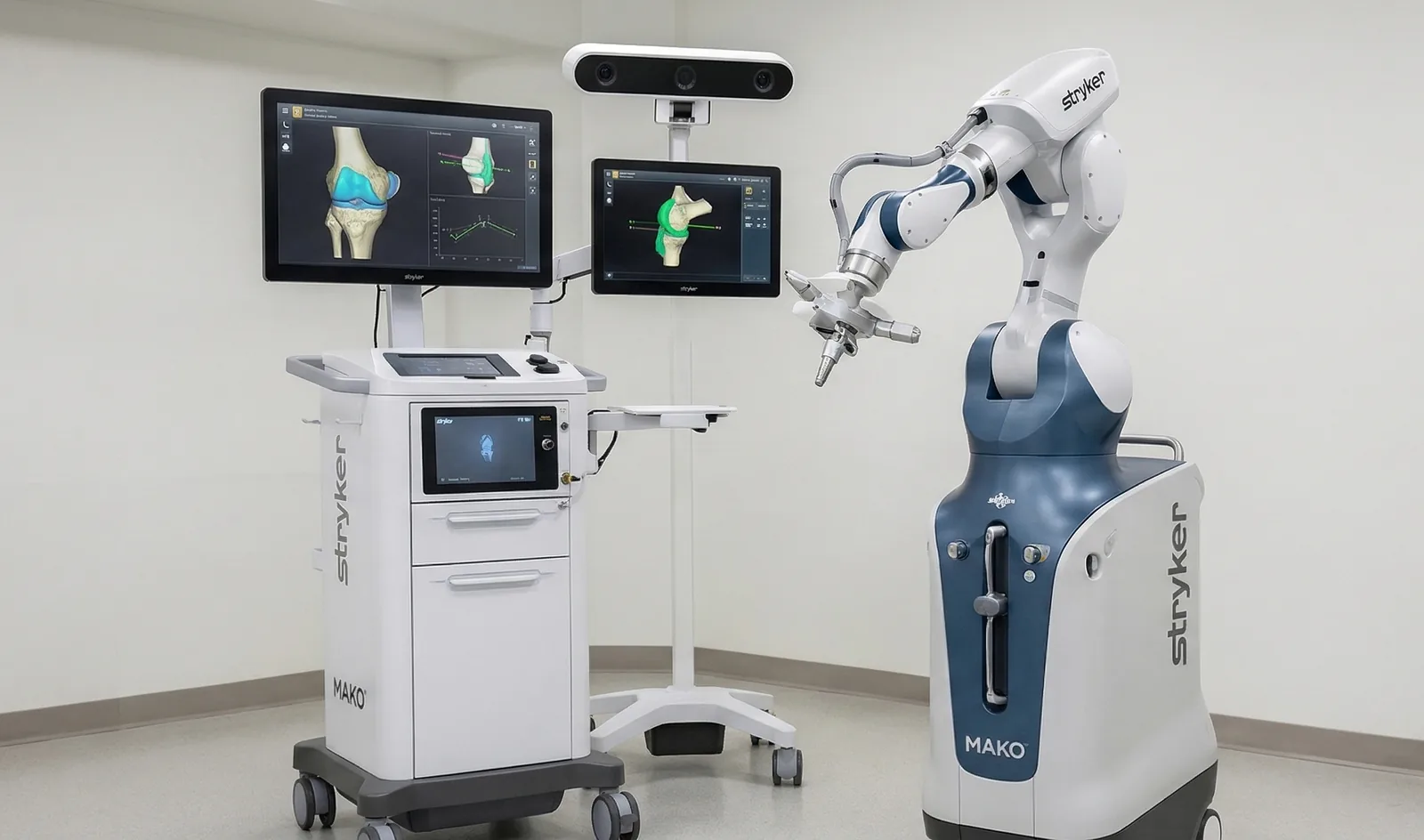
Robotic knee replacement technology enhances the precision of surgical procedures, allowing for more accurate alignment and positioning of the implant. This technology uses advanced imaging and robotic assistance to create a personalized surgical plan tailored to each patient's unique anatomy, offering a more minimally invasive approach that often leads to quicker rehabilitation and a faster return to daily activities.
Total knee arthroplasty is a successful treatment for tricompartmental knee arthritis. Computer navigation and robotic-assisted surgery have emerged as tools that aim to help plan and execute surgery with greater precision and consistency.
Computer and robotic-assisted total knee arthroplasty: a review of outcomes, J Shatrov, 2020
Further research indicates that robotic-assisted procedures can lead to better patient safety and reduced post-operative issues. One study supports the hypothesis that robotic total knee arthroplasty is associated with fewer complications, though at a higher average total cost than conventional total knee arthroplasty, and shows that robotic total knee arthroplasty can be safely performed in older and higher-risk patients.
Outcomes following robotic assisted total knee arthroplasty compared to conventional total knee arthroplasty, 2024
Patient Preparation and the Surgery Process
Preparing for total knee replacement involves pre-surgery assessments such as a medical history review, imaging studies like X-rays or MRIs, and a physical examination to evaluate the knee's range of motion and stability. On the day of surgery, patients should bring identification and any prescribed medications, and wear comfortable, loose-fitting clothing. The procedure itself generally involves administering anesthesia, making a surgical incision to access the knee joint, removing the damaged joint and positioning the artificial implant, and closing the incision with sutures or staples and a dressing.
Recovery Timeline and Physical Therapy
Recovery after total knee replacement is crucial for regaining mobility and strength, and physical therapy plays a vital role throughout. In the initial one to two weeks, the focus is on rest, ice application, and gradual movement; from roughly three to six weeks, physical therapy sessions focus on range of motion; and from about six to twelve weeks, strength training and a return to normal activities become the focus. Adhering to a structured rehabilitation program helps achieve the best possible outcomes after surgery.
Risks and Complications
While total knee replacement is generally safe, patients should be aware of potential risks, including infection at the surgical site, though this is rare; blood clots, including deep vein thrombosis, in the post-surgical period; and, in some cases, loosening or wear of the artificial joint over time. Patients should discuss these risks with their surgeon to understand how to help mitigate them.
Frequently Asked Questions
What is robotic knee replacement? Robotic knee replacement is a surgical technique that uses robotic technology to assist surgeons in performing knee replacements with enhanced precision and accuracy, allowing for better alignment of the implant and supporting improved outcomes and recovery.
How long is recovery after knee replacement? Recovery typically takes several weeks, with most patients able to resume normal activities within three to six months, though the exact timeline varies based on individual factors including age, overall health, and adherence to rehabilitation.
What are the risks of knee replacement surgery? Risks include infection, blood clots, and complications related to the implant itself, and it is important for patients to discuss these risks with their healthcare provider before proceeding with surgery.
Keep reading
Ready to Take the Next Step?
If you're considering joint replacement surgery, schedule a consultation to discuss your options and learn how outpatient surgery can get you back to your active lifestyle faster.